&sword; physics 17, 100
The fluid-like diffusion of metal atoms across a material could produce a superconductor—one that could benefit quantum computing.
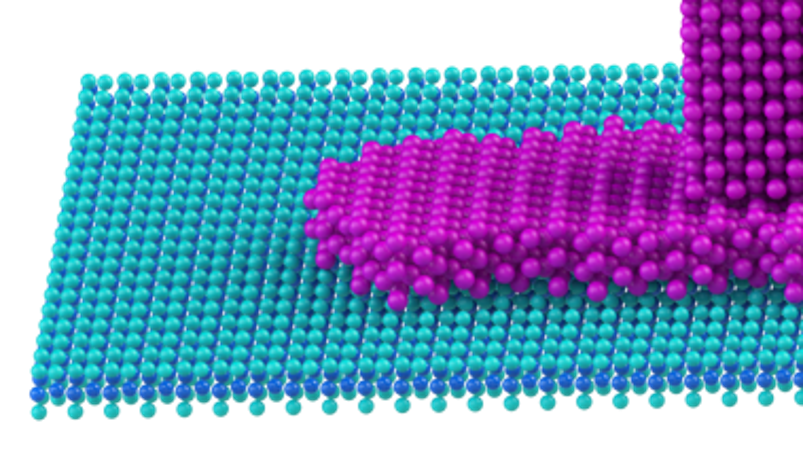

Y. Jia/Princeton University
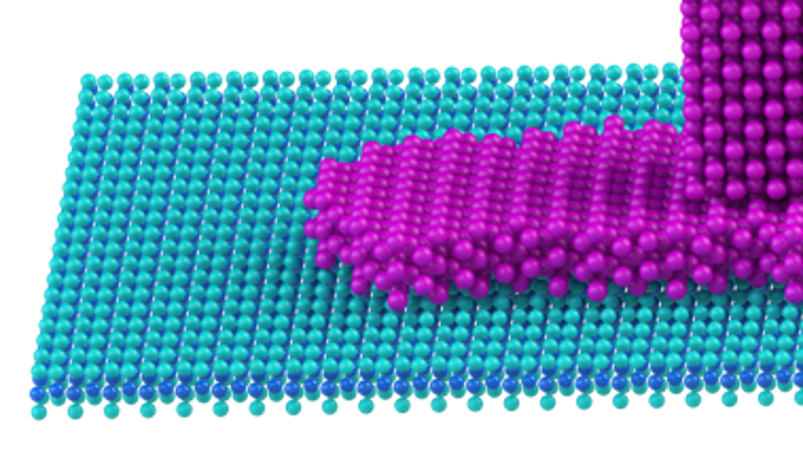
A type of resistance-free material called a topological superconductor could lead to error-free computing, but efforts to do so have come to now it is not available. Researchers have now demonstrated that a newly developed experimental technique can create topological superconductors that pass a key test [1]. They produced an even stronger layer on a topological insulator—a thin sheet of material that holds electricity at its edges. The method uses a “seed” of deposited metal that spreads like a liquid on the top of the insulator, creating a new glass structure. The results show no resistance, but more tests are needed to determine if it is a topological superconductor. Even if not, the researchers hope that new superconductors can be created using the method.
Many types of materials exhibit topological electronic properties resulting from quantum-mechanical properties that are quite sensitive to environmental perturbations. This power can lead to fewer errors in the calculations made in topological superconductors, whose electrons are expected to form together quantum states that can be used for quantum bits (qubits). Many attempts to find a topological superconductor have not been proven. One method is to induce superconductivity in a 2D topological material, but so far researchers have succeeded in a few specific cases, limiting efforts to prove the existence of topological superconductivity, said Sanfeng Wu from Princeton University.
Last year, Wu and his colleagues developed what they hope will be a general method for creating 2D topological superconductors. [2]. The method involves the infiltration of metal atoms in a thin insulating material. The mixing of atoms in bonds is known whenever two atoms are brought into contact, but the atom is usually spread a distance of only nanometers, and they do it in a non-uniform way, explains Wu. The researchers found that atoms could travel farther when they placed a small block of palladium metal (Pd) on one part of the topological insulator tungsten ditelluride (WTe).2) and raise the temperature to 200 °C. After about an hour, the palladium atoms spread over a region as wide as 10 µm. “It’s like water spreading over a film, which is surprising, since palladium melts at 1500 °C,” Wu said. The infiltrating atoms formed a new crystal structure, Pd7WTe2never noticed before.
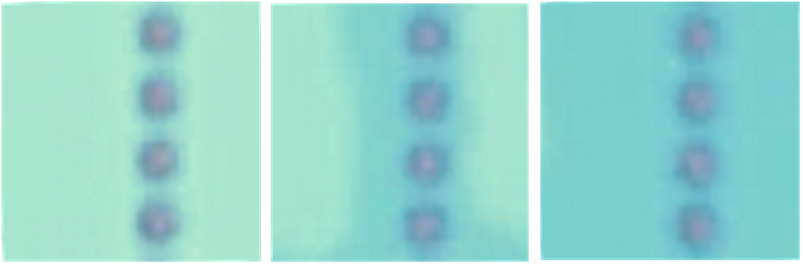
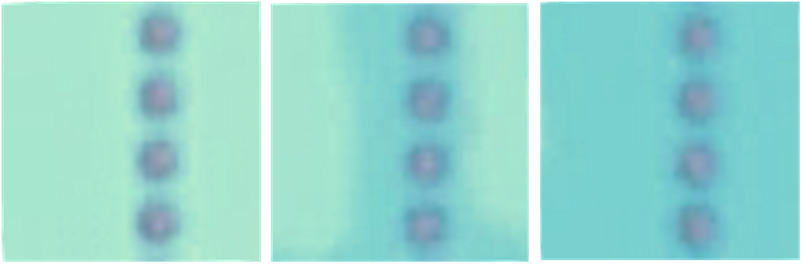
Researchers have now confirmed that this new material is superconducting. In addition, they have studied other materials and it has been shown that the atomic diffusion machine can work on different materials. The preferred material is molybdenum ditelluride (MoTe2), as shown in recent studies as a twisted MoTe2 bilayer—a pair of identical layers slightly offset from one another—exhibits a rare surface property called the phase anomalous Hall effect . [3]. Mote2 degrades in the air, making its integration with other materials very difficult. Using a palladium core, Wu and his colleagues were able to induce superconductivity in a twisted MoTe.2 The debris was protected by boron nitride coatings on the top and bottom.
The researchers say that their method offers a unique way to introduce superconductivity in 2D topological materials. It is possible to control the diffusion of atoms to form superconducting disks or rings of the desired size, and the resulting “islands” can be connected to bridges to form devices, such as circuit elements called Josephson junctions of used in superconducting qubits. “With this technique, we can think of a 2D object as a canvas that we can mechanically ‘paint’ on,” said graduate student Yanyu Jia. device can be used to study the properties of the superconducting state, which may show the special behavior expected in topological superconductors.
Nanotechnology expert Christian Schönenberger from the University of Basel, Switzerland, said the new work is not very different from his own recent experiments of superconductivity induced in WTe2 [4]. But Wu believes that there is a main difference between the two models, in particular, the amount of diffusion observed by his team indicates a new mechanism for the movement of atoms. Materials scientist Yoichi Ando from the University of Cologne, Germany, agrees that a new—and surprising—chemical process appears to be at work. “I think this method will be of interest to a wide range of researchers working on 2D objects as a new tool,” said Ando.
“This is a very interesting result,” said Xiaodong Xu from the University of Washington, Seattle, whose team observed the quantum anomalous Hall effect in MoTe2 [3]. According to him, the new method is promising on the demand of 2D superconductors. “I can imagine many new machine structures that this powerful method will enable,” Xu said. “In fact, my group has already repeated some of these decisions when we learned the task.”
-Michael Schirber
Michael Schirber is an Associate Editor for Physics Magazine based in Lyon, France.
Identity
- Y. Jia etc.“Superconductivity from surface mechanical properties on 2D topological chalcogenides,” Phys. Rev. X 14021051 (2024).
- Y. Jia etc.“Two-dimensional bulk transport and crystal growth on single materials,” Nat. Synth. 3386 (2023).
- H. Park etc.“Observation of the Hall effect of phase classification,” nature 62274 (2023).
- M. Endres etc.“Transparent Josephson connections on the WTe topological insulator system2 by Pd diffusion,” Phys. Rev. Mater. 6 (2022).
Subject Area
#Atomic #Spreading #Superconductors