JUPITER FARMS – Three winters ago, a baby brown pelican floated on the frozen Connecticut River as it battled the cold and its feet began to freeze.
Today, that “snowbird” – named Arvy – is thriving in warm Florida at the Busch Wildlife Sanctuary at Jupiter Farms, thanks to the people who pulled him out of the cold water and brought him to safety .
“Arvy has an interesting story,” said Amy Kight, executive director of the Busch Wildlife Sanctuary. “Normally, the brown pelican will migrate. Arvy didn’t know this or forgot, so he stayed in Connecticut on a cold lake.”
Members of the Connecticut Audubon Society rescued Arvy and took him to a small wildlife sanctuary in Connecticut, but his staff was unable to perform the necessary surgeries on his cold injuries. They asked Busch Wildlife to take him in, and the staff immediately said yes.
Illegal pet trade: Busch Wildlife’s latest addition escapes and greets visitors with a gentle ‘Meow’.
The baby pelican takes 12 hours to travel in a small plane from Connecticut to Jupiter
Another major challenge the nonprofit faced was finding a way to bring Arvy south in a cost-effective way.
The solution emerged unexpectedly, Kight said. A mother-daughter pilot team volunteered to fly Arvy from Connecticut to Jupiter in an RV-12 twin-engine airplane, which became Arvy’s name.
The kicker was the daughter’s high school engineering class that built the plane. The trek was a grueling 12 hours, with four fuel stops in between.
“Arvy went viral (because) he didn’t use his wings to fly south for the winter,” Kight said. “When I got the whole story behind it, I was like, ‘Wait a minute! What happen?’ “
Arvy underwent multiple surgeries to remove cold spots on his feet when he arrived at Busch Wildlife in February 2021. The sanctuary’s hospital director also gave him special food, cold laser therapy to induce healing and medicine to treat his damaged stomach.
About 30% of his legs were empty, Arvy lost, but he jumped around his fence at the temple with only a little leg. It can also fly and swim without any problem.
How the northern province grew: A 16-story tower with 595 apartments is planned for Lake Park
“He’s very familiar with people, so he has a dog personality because of everything he’s been through as a kid,” Kight said. “He’s had special needs for a long time, so he’s been with us ever since.”
Arvy moved into his new home at Busch Wildlife on June 4, 2021, when he officially became a resident. Kight remembers how worried he was for her when she first arrived.
“The ice friend is a strange thing,” Kight said. “We removed what we saw, and then a lot of tissue started to die. It’s gotten to the point where we can’t go back and give him a good quality of life.”
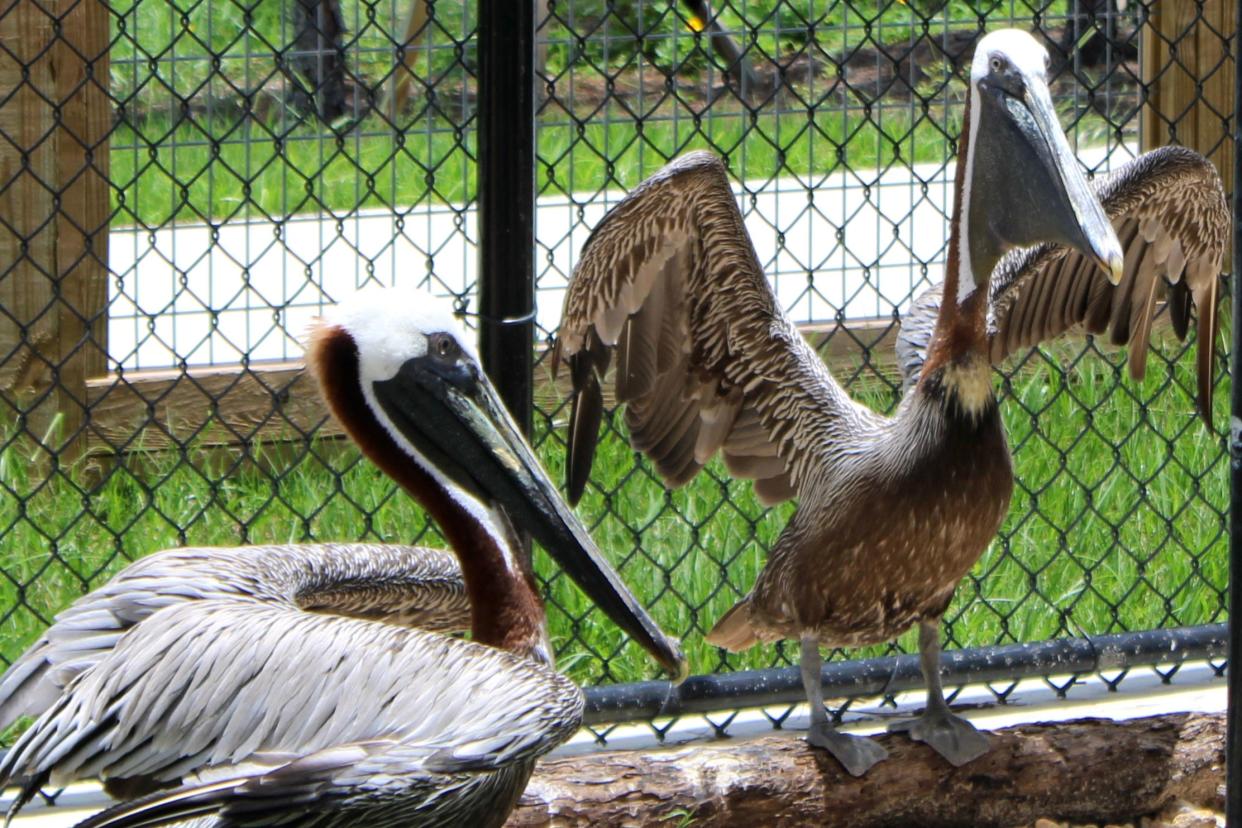
Arvy is a resilient bird who has overcome his challenges. He loves his keepers at Busch Wildlife and runs to them as soon as they enter his cage, often feeding his fish.
She also works as a surrogate mother to a pelican named Beans that they share space with.
“When you have an older animal and a younger one, they show them the ropes,” Kight said. “They learn to follow each other and mirror each other’s behavior. Arvy is teaching Beans how to thrive in a new environment.”
Common problems for birds that ignore migration
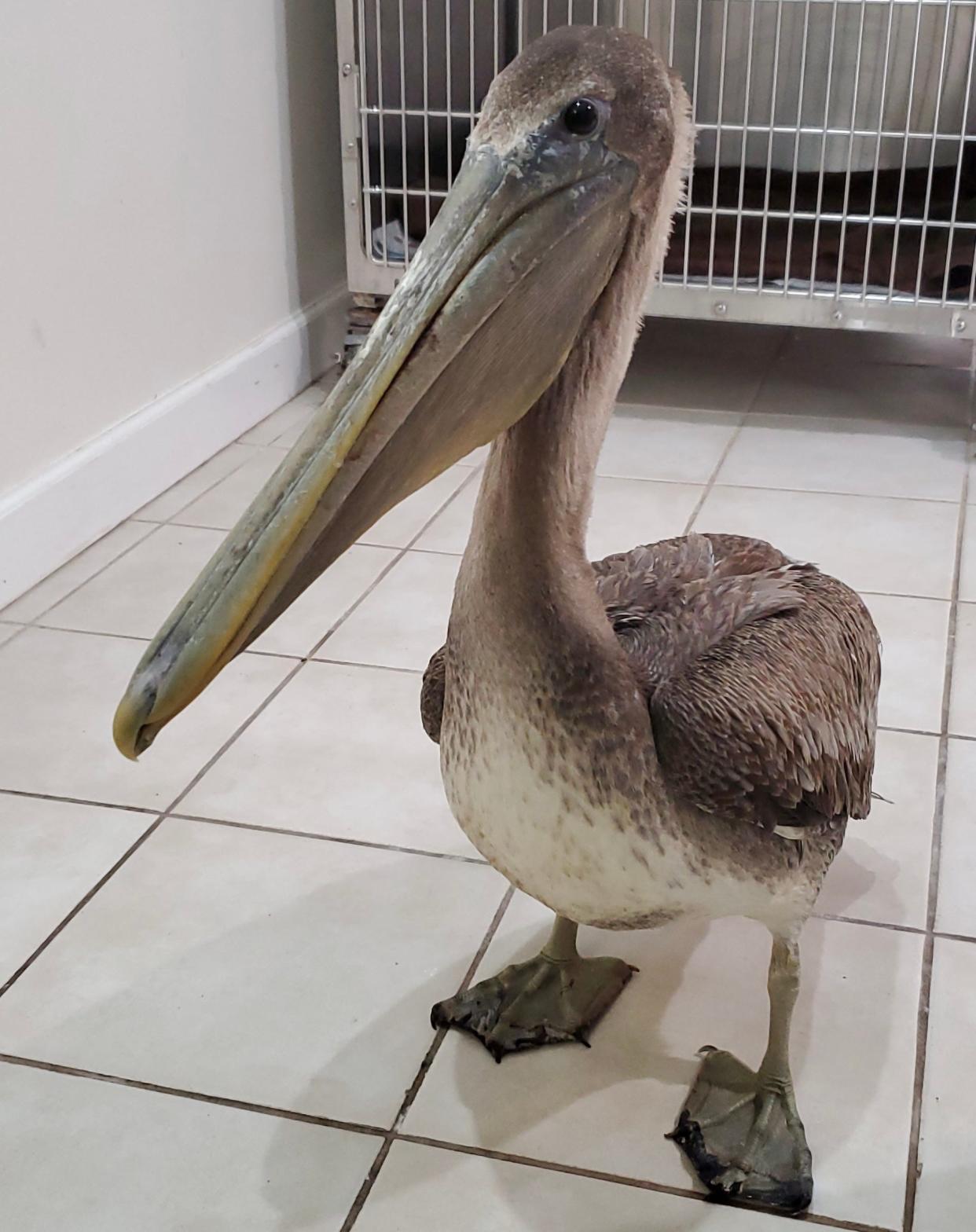
Pelicans and other birds that spend most of the year in the South often suffer from the cold.
Busch Wildlife usually rescues a few people every year because they spend so much time in the north during the winter. The number of cases they treat varies depending on weather conditions, Kight said.
Birds ignore flying south in the winter for a number of reasons, he said.
Maybe because they are being fed by someone nearby and they depend on the source of food, they just don’t feel like it or are caught in the cold and are too tired and weak to travel south.
“I always say Arvy is like a kid who doesn’t know what to do,” Kight said.
Maya Washburn covers northern Palm Beach County for The Palm Beach Post, part of the USA TODAY Florida-Network. Reach out to him c mwashburn@pbpost.com. Support local writers: Share today.
This article first appeared on the Palm Beach Post: Snowbird: Pelican conquers the cold in Jupiter at Busch Wildlife
#Meet #Busch #Wildlifes #snowbird #Pelican #breaks #ice #mark #years #preserve