
CHINOOK BEND NATURAL AREA, Carnation – A chocolate and fat chick, one of the best-fed chicks, is feeding on the restoration area’s new plantations.
Hunger behavior is adding wrinkles to King County’s plans to restore salmon habitat. The noise, which ultimately helps the salmon in a balanced environment, is eating too much and they are destroying some of the expensive work needed to return the salmon to these wetlands in large numbers.
Beavers have many benefits when they create dams and slow the flow of the river, providing more habitat through the way they live on the landscape. But shade from trees is the key to healthy salmon. Now the district is working to find a way to keep the noise down while planting trees along the river, trees and grasses that are needed for fish, especially salmon. a cool and clean water is beneficial.
Part of the success for the district is the bees, fish and plants, all living together.
Experiments in the Skykomish River have shown that it can reduce summer water temperatures. And historical studies in the Stillaguamish River found that the loss of bees significantly reduced the river’s capacity, especially for coho. So finding out how to grow shad, pea and salmon together can be a big win.
Jennifer Vanderhoof, the King County senior ecologist and beaver expert, is ready with a plan for these rodents that can eat a restored area with nothing. This winter, he and other colleagues conducted an experiment in a lake to try to meet and work with hungry people in the province’s salmon restoration project.
It’s a weedy, weedy weed, that thrives in the sun in the area, and there’s not enough shade to drain the water. Now the managers are trying to grow shrubs and trees. They were happy when they returned only to bend here – but this means that the place of recovery they are trying to plant the shade, has become a turkey restaurant. This experiment marks Round 1 among scientists versus bees’ appetites.
The goal is to grow more plants than the bees will eat. Without any extra effort, instead, they will grow into baby chicks.
Why bother?
Beavers are natural engineers who can improve Samoa’s habitat faster and faster than humans, especially in times of climate change. Coho salmon thrive in canals where softening of the water has helped. And more than 123 species benefit from salmon, from small bugs to bears, and, of course, people love to eat them too.
On a recent spring evening, Vanderhoof toured the plantations to see how different methods were used, and he showed four different styles that started this winter.
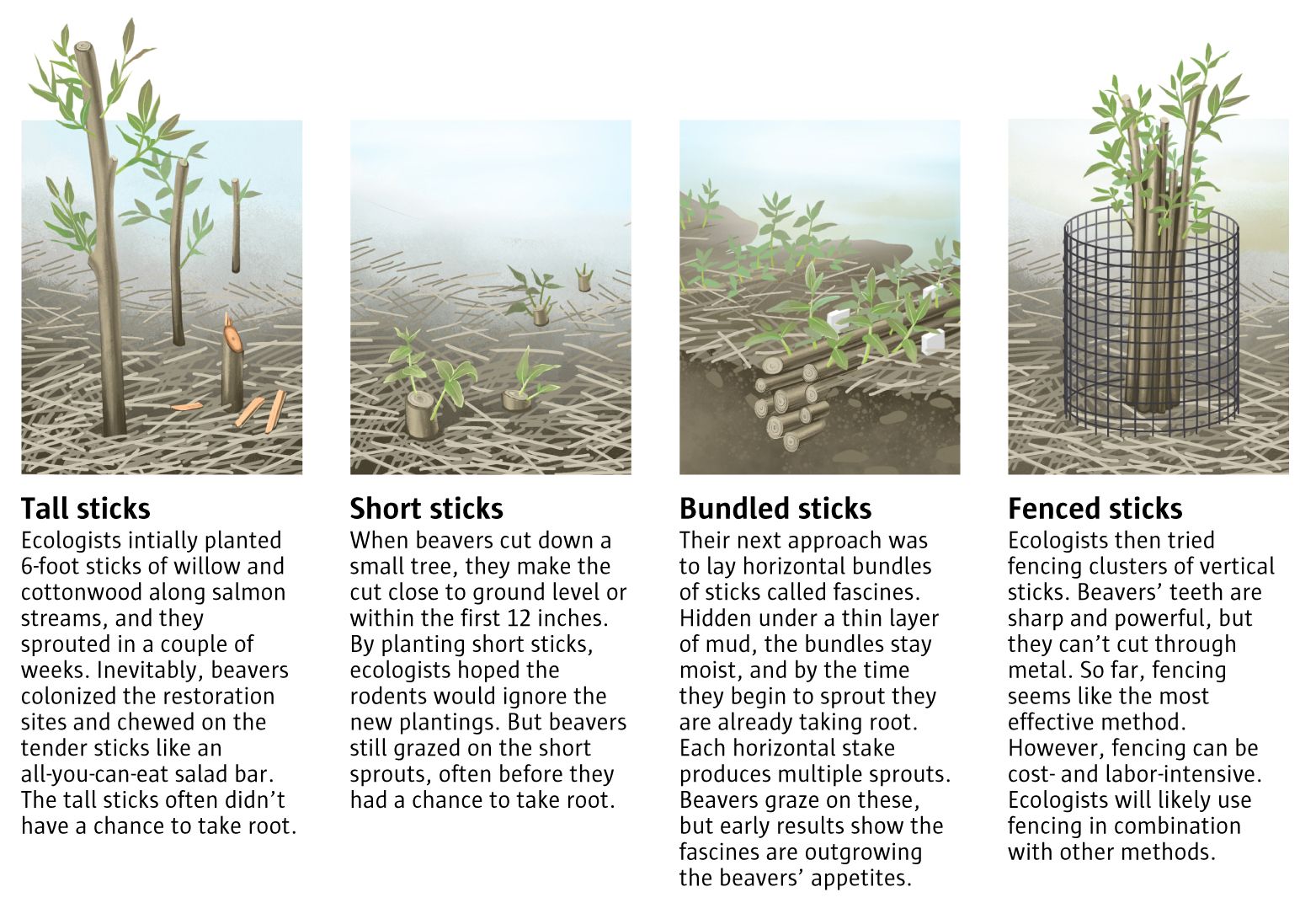
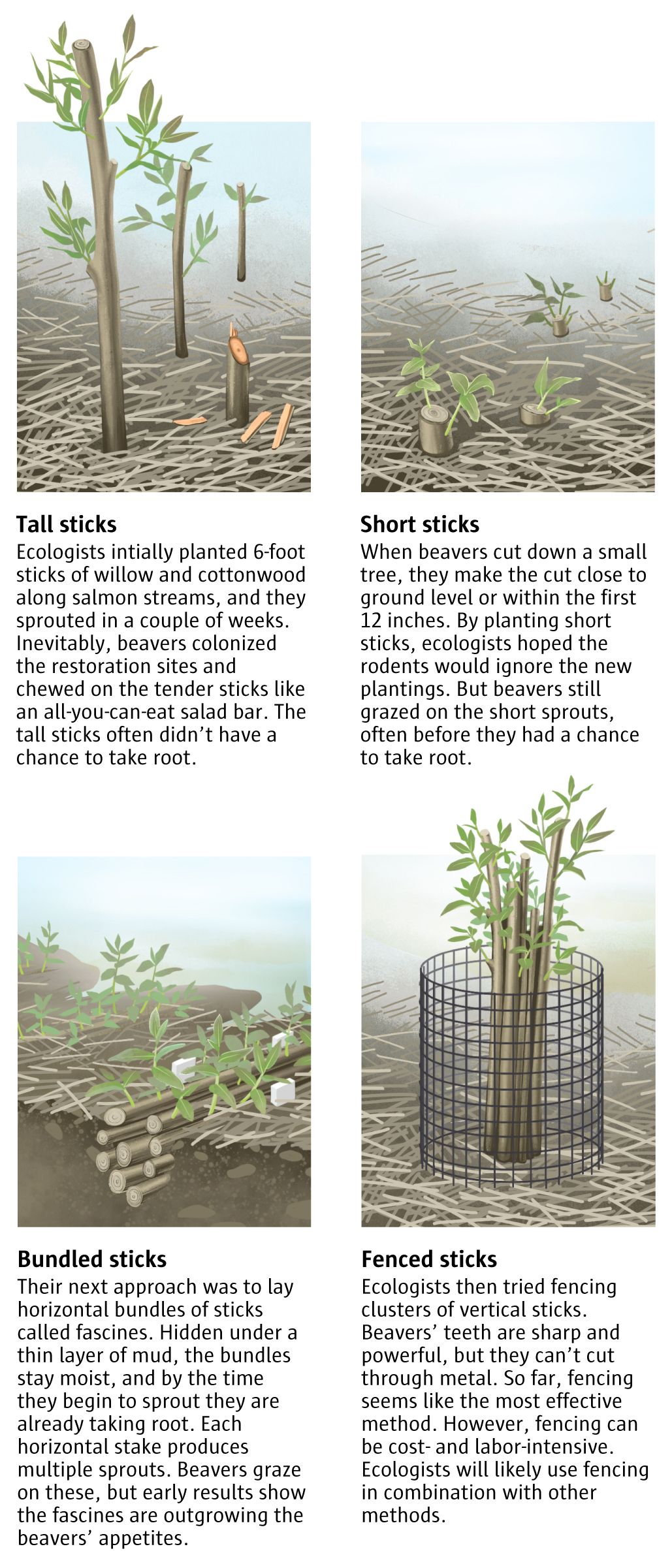
He pointed to the tall trees. Short trees. Attached tree. Fences – in an attempt to keep people out. So far, everything but the trees behind the fences are being eaten to one degree or another.
But he expected to see many leaves still growing on plants recently placed in the soil to germinate.
Replant with beans
King County ecologists are experimenting with different farming methods to grow four shade trees improving salmon habitat. The challenge is figuring out how to increase the bee’s appetite for sprouts and cottonwood.
Here, all the benefits of the presence of bees were manifested in the flourishing of the pond created by their water.
It’s more than noise there. There were ducks and ducks. Muskrat and otter. He wrestled and swallowed and vomited. A big bluefin was caught. Swainson’s thrush sang their evening song, and the water was swarming with insects.
Signs of noise were everywhere – even the cane Vanderhoof carried was being chewed. He walked past the holes in the ground where the bees were wondering on the bank. “They are a kind of animal,” he said of bees, which are very adaptable to humans.
Almost driven to extinction, beavers have returned to the landscape today and have proven to be able to live in drains, sewers, anywhere they can find water. water to work with and enough food.
“We haven’t really tried to restore the bees,” Vanderhoof said. “We’re trying to bring the salmon back.” That’s where the new model comes with a manual on the design of rehabilitation areas that have in mind beaves, recently published by the province, to come in.
“You have to feed the fire,” he said of the beans. “But you also need to protect the trees so they don’t grow back.” A big tip: Plant so much food that the bugs can’t eat it all — but keep it on the ground and balance out the ecosystem, Vanderhoof said.
“That’s my dream.”
#salmon #recovery #helping #hurting