“In the history of that period, the race to show the level of political power made the exploration of the moon impossible,” the plan said.
The new plan, “Strategic Concept of Resource Utilization Development Route of the International Lunar Research Station”, was written under the leadership of Pei Zhaoyu, deputy director of CNSA’s Lunar Exploration and Space Engineering Center, and published in the Chinese Journal of Astronautics in April. .
“And countries like the United States don’t have a clear indication of this.”
Washington has long made China a candidate in this new lunar eclipse, seeing the race as a natural one.
But China sees the game differently, according to Pei.
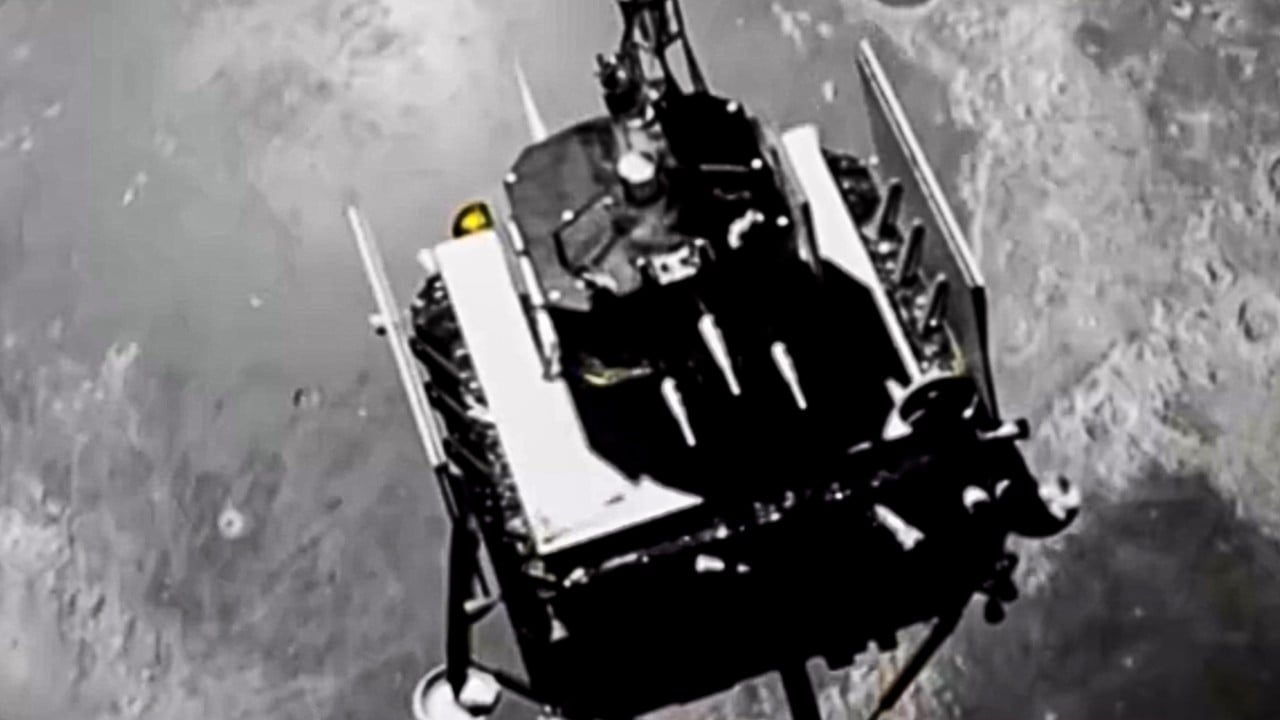
02:01
China’s Chang’e-6 touches down on the far side of the moon on a mission to bring rock samples back to Earth
China’s Chang’e-6 touches down on the far side of the moon on a mission to bring rock samples back to Earth
Beijing hopes to replicate its global success by carrying out large-scale projects on the moon. It will help to establish technology, production and economy to encourage many countries to stop following the United States and participate in China’s efforts to use the resources of the moon, according to the plan.
“Using the resources of the moon is a scientific challenge, a technological and an economic reward. Quality and success will be the main criteria of evaluation, to guide the construction, operation and sustainable development, ” is the letter of Pei’s team.
These molecules of hydrogen and oxygen, captured in the soil of the moon, showed the possibility of up to 270 billion tons of water resources on the moon, which can be used by produce fuel, water and oxygen for astronauts, the Chinese space agency said on social media. media.
According to the latest plan, China will launch two large spaceships in the next few years to conduct detailed research of these resources and prove the key technologies for resource utilization. By 2030, collaboration between humans and intelligent machines is expected to be achieved on the moon.
A monthly resource survey will also be completed during this period covering a width of a thousand kilometers and a depth of hundreds of meters.
By 2045, China’s moon will have major facilities such as power plants, factories, scientific research institutions, rocket launch sites, tourist centers and a small underground city. .
China’s resource-exploring robots will roam the entire planet. It is estimated that more than half of the investment in the construction and operation of these facilities will come from countries other than China, and will going into a bad economic situation. Humans will use this platform as a starting point to explore Mars.
“China will be a leader in human deep research projects,” the plan said.
China’s first lunar probe, Chang’e-1, was launched in 2007. Due to lack of experience and confidence, this small two-ton satellite orbited the earth for more than two weeks before landing on the moon.
Immediately after the launch, the chief of the lunar exploration project, Luan Enjie, told the Xinhua News Agency: “China will not participate in any kind of lunar competition with any country. .”
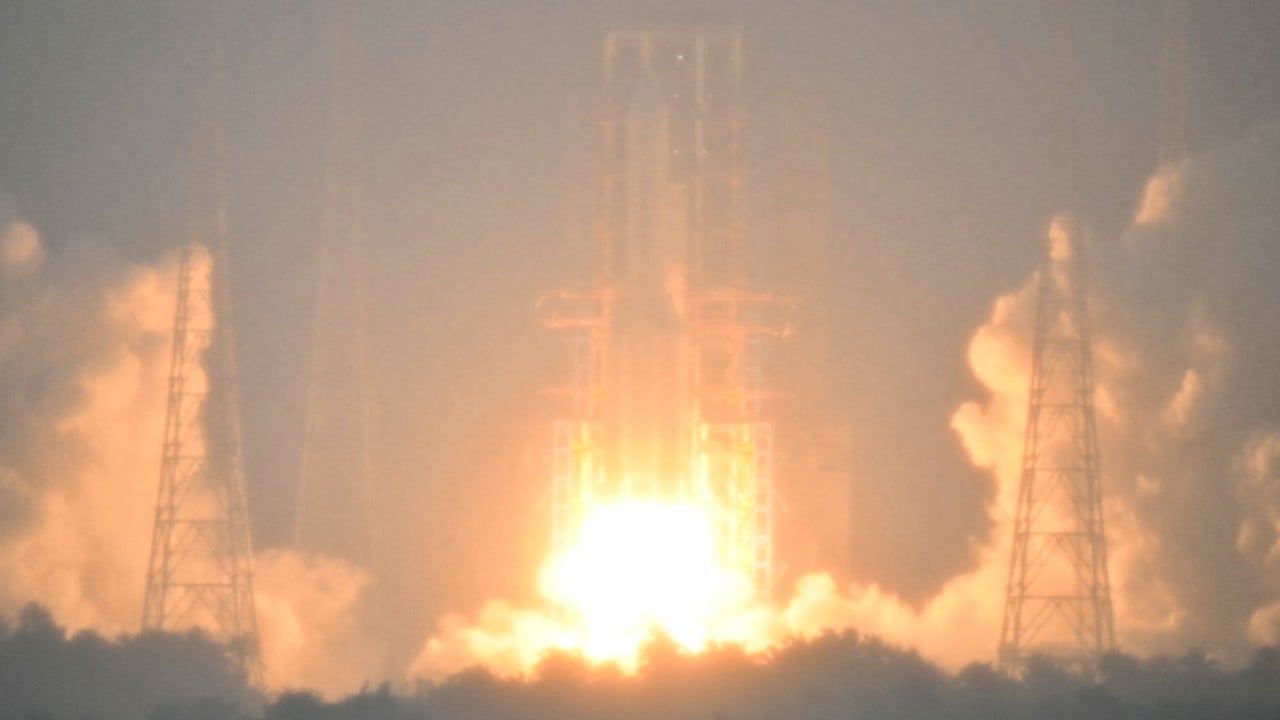
02:14
China’s Chang’e 6 launches historic collection of first rock samples from far side of moon
China’s Chang’e 6 launches historic collection of first rock samples from far side of moon
Although the United States began exploring the moon earlier, due to mission delays and limited funding, “it has lost its lead,” Pei’s team wrote.
To counter China’s advances, the U.S. government has commissioned private sector lunar missions, believing they can build a better lunar base than Nasa. To encourage these private players, the US Congress made a law that confirms the principle: “First to explore, first to own.”
The US Skylab space laboratory worked for less than a year before it crashed, and the main technology of the International Space Station is provided by Russia.
#Chinas #moon #ambitions #soar #admits #moon #race